
Build a Banks Ownership Timeline
Pull the newest deed tied to the tract first. Then open a worksheet with one row per transfer. Filling in names, dates, deed types, and record placement as you go keeps the chain honest. That discipline stops a same-name hit from slipping in as an owner of record when no real transfer occurred.
| Transfer date | Grantor to grantee | Instrument | Land match |
|---|---|---|---|
| Newest recording | Conveying party to receiving party | Classify the deed exactly | Book/page or instrument plus legal description |
| Prior transfer | Earlier owner to later owner | Warranty, quitclaim, correction, or other verified type | Acreage, lot, phase, plat, and prior deed |
| Earlier book | Indexed grantor to grantee | As stated in the record | Clerk book, microfilm, or archive placement |
Treat any labels on the worksheet as placeholders. The real parties and dates come from the deeds themselves. A tax-card sale line is not a transfer, and a security deed, cancellation, release, or correction should never enter the chain as an ordinary sale.
Walk Banks Deed Records Backward
Three routes open the path: the GSCCCA search, the Banks Kofile route, and the Clerk's record room. Walking deed records backward means the receiving party on one deed becomes the name you search for in the earlier conveyance.
- Find the newest deed and record its grantee, grantor, date, type, legal description, and prior references.
- Search that grantee in an earlier range to find how the party acquired the same tract.
- Compare acreage, lot and block, phase, land lot, parcel key, and prior-deed language. Reject a name-only match.
- Repeat. Move to books, microfilm, or archive resources when the online trail ends.
- Grantor
- The party conveying the interest stated in a deed.
- Grantee
- The party receiving that interest.
- Chain of title
- The linked series of instruments affecting the same land.
- Reverse index
- An index organized to help locate grantors.
- Record placement
- The book/page or instrument number that allows the Clerk to retrieve the filing. Preserve it with the deed type, recording date, party spellings, cross-references, and full property description so another researcher can repeat and audit the match.
Write down both the execution date and the recording date when the deed supplies them. Each answers a different question. Hold onto references pointing to an earlier deed, plat, estate, spouse, or corrective filing, because those links can explain why a former owner appears under another name and can save you several broad searches.
Check the legal description after every step. Names can align and still mislead. A former owner may have held several Banks County tracts at once, so the right party paired with the wrong lot builds a false chain that later records may never expose.
Classify Each Banks Instrument
The Banks Clerk's Real Estate and UCC page covers deeds, security deeds, liens, plats, cancellations, and releases. It also covers transfer-tax records. Classification matters. It keeps a release or corrective document from masquerading as a purchase. No new owner of record is created by that mix-up.
A warranty deed and a quitclaim deed can both convey an interest. They carry different assurances, though. A security deed generally secures debt. A cancellation releases that interest. A correction deed repairs an error while leaving the ownership sequence intact. Read the instrument text itself, and seek qualified help for legal conclusions.
Note: Preserve the portal's exact document label. Keep the recording reference too, and decide how an instrument fits the chain from there.
Follow Banks Plats and Splits
A modern tax parcel may combine older tracts. It may also hold only part of one prior tract. Follow every plat reference. Compare the legal description at each step, since metes and bounds may call for survey comparison. A label like "Lot 12, Phase IV" points to a recorded subdivision plat.
The GSCCCA Plat Index gives statewide plat coverage from at least January 1, 2004. It is searchable by county, name, book and page, date, instrument type, and geography. Banks planning records add local leads. The Oaks at Banks Crossing Phase IV appears with parcel references including B77 012. Road records mention Oakwood Drive and Maple Drive. Such clues can tie a modern parcel to its phase and its deeds.
Banks Online Deed Depth Is Unverified
No official source publishes the earliest Banks County deed year available online. GSCCCA became operational statewide on January 1, 1999. That date is not a Banks cutoff. Older records may be indexed online, absent online, or indexed without an accessible image.
Search first. Record your oldest confirmed hit. Then ask the Clerk. Ask whether an earlier book, index card, microfilm reel, or re-indexed series continues the same tract. Kofile account and print rules can also separate index access from image access.
Three questions deserve separate answers: online index coverage, online image coverage, and certified-copy availability. You may find the book and page without seeing the scan. You may view a scan that is not a certified record. Note exactly what the system supplied. Then use the Clerk's counter or a written request for the missing level of access.
Coverage limit. Banks County's earliest online deed year is not verified. Continue at the Clerk, Archives, or deed books instead of assuming 1999 is the start.
Carry Banks Former Owners Offline
The Georgia Archives county-film search is an official route to deed books. Tax digests and probate materials are there too. The Archives tax collection and the FamilySearch catalog hold useful leads. Clerk finding aids can point to books no modern portal exposes.
Banks County formed in 1858, with Homer as its record hub. Archived series include marriage books from 1859 and Ordinary Minutes for 1859 through 1879. Probate Accounts cover 1904 through 1908. Annual returns or vouchers run 1917 through 1936. These are not deed-coverage dates. They are identity and estate clues that can reconnect a broken chain.
The courthouse-disaster map lists no Banks event. That does not prove every volume survived. Check the county card and the exact series before claiming completeness.
The official collection below helps locate older Banks holdings. Search the county-film catalog before requesting a book or reel.
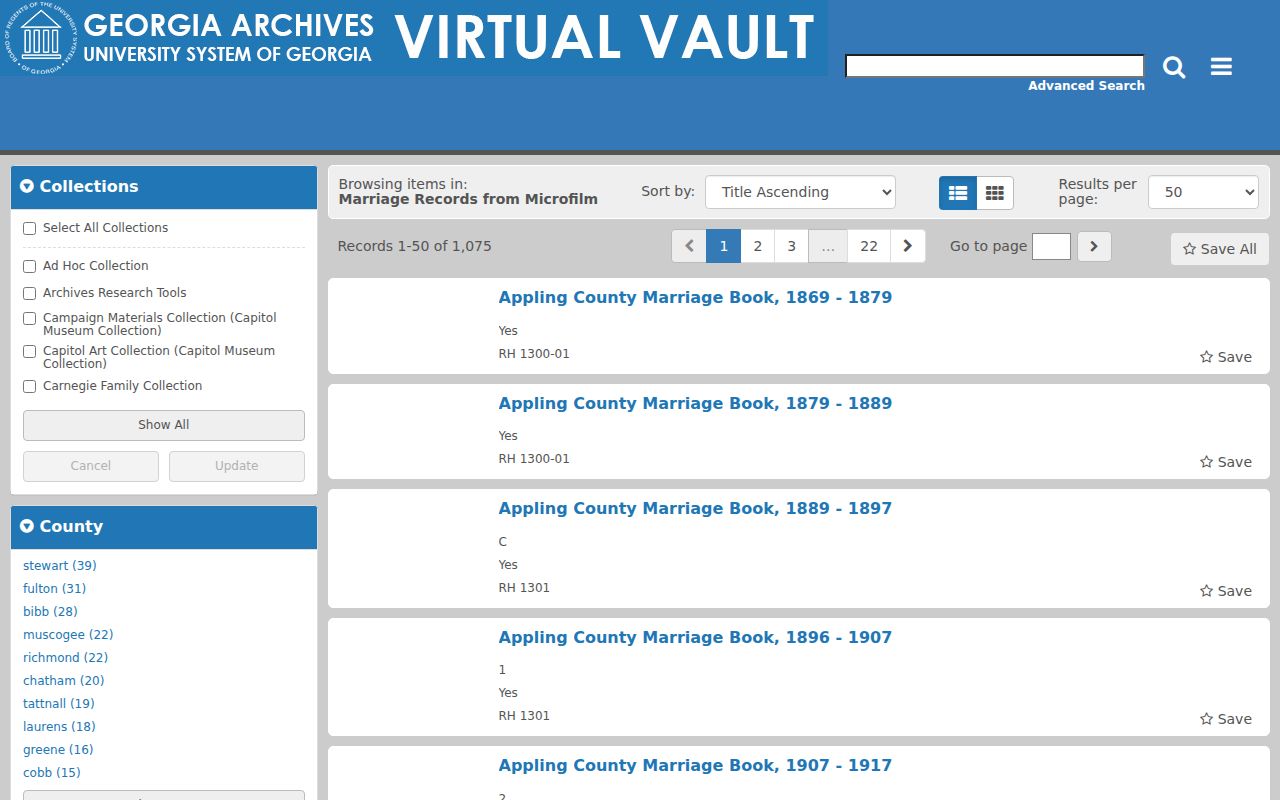
Treat each result as a finding aid. Confirm names and land descriptions in the actual record.
Repair Banks Probate Chain Breaks
A death interrupts a clean chain. The decedent can stay on the tax roll while the estate is open. Heirs named in probate papers may hold no recorded title at all. That gap between probate and deed is common in Banks County. Pull the estate file first, then the later deed or assent that moved the land.
Keep one rule in mind. A death certificate conveys nothing. Match the estate name, the representative's role, and the parcel description. Confirm the final recorded instrument too. For older identity evidence, the Georgia Archives vital-record guide is one right channel. Banks Probate Court is the other. The Georgia Archives vital-record guide and Banks Probate Court are the right channels.
Record the case name, representative, dates, court references, and land description. Then work the deed index again under each name. Check the decedent, the estate, the representative, and the eventual recipient. A will or heir list can explain the family path. The recorded land instrument is still what puts that path into the property records.
Use Old Banks Road Clues
Old descriptions rarely match a modern address. A tract near Lula may be described by the railroad rather than a street number, and older documents may reference Homer simply as the courthouse seat. Search legal descriptions and neighboring owners instead of forcing today's city name into an old query.
Splits, road changes, and spelling shifts break address searches quietly. Keep original spellings in your notes. Try initials, married names, trust wording, and entity suffixes without correcting the index. When a street clue fails, compare the adjoining-owner calls in the old deed against roads, streams, land lots, and plat labels. Those anchors often survive a route renumbering. A GIS map can orient you, but the recorded plat and deed description control the match.
Limits of Banks Ownership History
An ownership list is only as strong as its linked instruments and its land match. An index can omit an image. A tax digest may list an assessed party without proving any deed transferred. A plat maps a lot yet may not state every interest that burdens it. For a title opinion, an unresolved gap, or a disputed interest, rely on a qualified professional. That professional should work from certified records. For house history or purchase diligence, keep citations so another researcher can repeat each step.
The Banks County Public Library and Maysville Public Library add context. They draw on newspapers, local help, and statewide databases. They can explain the people, roads, and events around a tract. They must lead back to the deed records, never replace them. Keep a research log too. Log the query spelling, date range, and system searched. Note the result reference. State why each candidate deed was accepted or rejected. That discipline matters most when two owners share a name. A repeatable log exposes gaps early. It stops a shaky lead from hardening into a claimed former owner of record.
Lawful use. Research former owners for land and history questions. Never use archival or current addresses to track, harass, or harm a living person.